
Ejaculation-preserving prostate resection
Surgical technique to preserve ejaculation
 After prostate surgery for benign prostate enlargement, erections and orgasms are usually maintained, but the ability to ejaculate is almost always lost.
In patients with an enlarged prostate requiring surgery, a special surgical technique can be used if there is a desire to preserve the ability to ejaculate. This is the so-called ejaculation-protective transurethral resection of the prostate (also known as "ejaculation-preserving prostate resection" or "ejaculation-preserving TUR-P") and the bladder neck. This surgical technique preserves the ability to ejaculate normally in almost all men who have undergone surgery.
The specialists at our Continence Center in Hirslanden (Zurich) will be happy to inform you about this special prostate operation to preserve the ability to ejaculate as well as other treatment and clarification options for benign prostate enlargement.

As ejaculation-preserving prostate resection leaves more prostate tissue in the body, which can grow again and lead to discomfort, some men will need a repeat procedure after several years in the long term. The relief of prostate-related bladder problems after the operation is comparable to the conventional TUR-P surgical method.
During prostate resection, only the inner tissue of the prostate is removed. As prostate cancer prefers to affect the outer prostate envelope, the risk of cancer remains. For this reason, men should continue to attend regular cancer screening appointments with their urologist after prostate surgery.
Reasons why ejaculation is no longer possible after certain prostate operations
The prostate, also known as the prostate gland, is a chestnut-sized organ in the center of the male urinary and sexual tract. It lies below the bladder and surrounds the urethra. The prostate consists mainly of glandular tissue, which produces prostate secretions. This makes up the majority of seminal fluid.
In the case of benign prostate enlargement, the inner tissue of the prostate grows and then presses on the urethra and bladder. As a result, the patient may have difficulty emptying the bladder and even suffer from incontinence (involuntary loss of urine).
During prostate surgery - such as the TURP procedure or using the Da Vinci method to treat a benignly enlarged prostate - the inner glandular tissue is usually removed completely. The prostate can then no longer produce secretions - the ability to ejaculate is lost after prostate surgery.
Even with a radical prostatectomy, i.e. the complete removal of the prostate to treat prostate cancer, the ability to ejaculate is lost after prostate surgery.
Requirements to be able to maintain ejaculation after prostate surgery
Whether a man is suitable for a sperm-retention prostate operation must be clarified in detail by his doctor before the procedure and discussed in detail. In a very advanced stage of prostate enlargement or if complications have already occurred, this technique is not recommended.
Procedure and special features
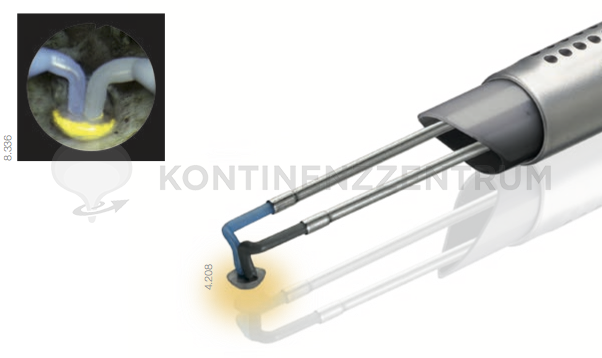
 Ejaculation-preserving prostate resection can be performed under general anesthesia or spinal anesthesia. During the procedure, an optical instrument (resectoscope) and an electric snare are inserted via the urethra (transurethrally). The snare is used to remove the enlarged tissue inside the prostate. During the scraping procedure, not all of the inner tissue is removed, but a part near the seminal mound is retained. Following the operation, a permanent catheter with an irrigation fluid is inserted. This is used to flush the bladder and is removed three to five days later before the patient is discharged from hospital. Bladder emptying is then possible again without interruption. Ejaculation is also possible again a few weeks after the prostate operation.
The sperm ejaculation-preserving surgical technique of ejaculation-protective transurethral prostate resection requires detailed knowledge of the mechanisms underlying ejaculation. The method is based on the preservation of certain parts of the prostate tissue above and next to the seminal mound. This allows the prostate to continue to produce the secretion that is important for ejaculation. Studies show that this technique preserves the ability to ejaculate in nine out of ten men who have undergone surgery.

As ejaculation-preserving prostate resection leaves more prostate tissue in the body, which can grow again and lead to discomfort, some men will need a repeat procedure after several years in the long term. The relief of prostate-related bladder problems after the operation is comparable to the conventional TUR-P surgical method.
During prostate resection, only the inner tissue of the prostate is removed. As prostate cancer prefers to affect the outer prostate envelope, the risk of cancer remains. For this reason, men should continue to attend regular cancer screening appointments with their urologist after prostate surgery.
Contact us for a consultation! We will be happy to inform you about your individual assessment and treatment options, about ejaculation-preserving prostate resection and about ejaculation after prostate surgery. You can reach our center (KontinenzZentrum Hirslanden) in Zurich by telephone. Our clinic is open from Monday to Friday between 8 am and 5 pm.