
Bipolar Enucleation of the Prostate
Prostate Peeling for Severe Prostate Enlargement
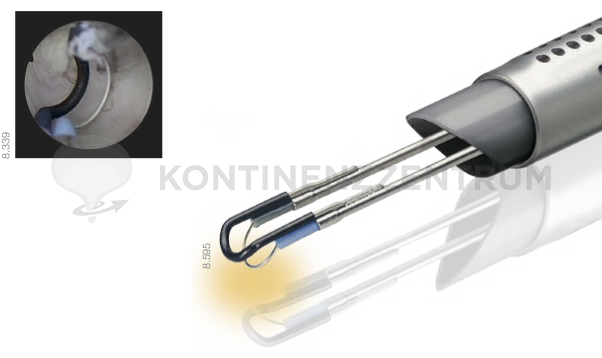
In the case of very pronounced prostate enlargement, the outflow from the bladder is so severely restricted that bladder emptying is only partially possible. Affected men suffer from considerable discomfort due to benign prostate enlargement. Often, the medication available is no longer effective enough to alleviate the symptoms caused by the enlarged prostate.
For treatment, extensive surgical removal of prostate tissue, known as "bipolar enucleation of the prostate", can then be performed. This is a prostate exfoliation - a procedure in which the inner tissue of the prostate is removed. After the operation, the bladder can be emptied again without disturbance and with a good urinary stream.
We Offer Personalised Advice on an Enlarged Prostate
The specialists at the Hirslanden Continence Centre in Zurich will be happy to advise you on bipolar enucleation of the prostate and other possible prostate surgery procedures.
You can contact our centre by telephone from Monday to Friday between 8 am and 5 pm. You can also use our online booking service!
Procedure for Bipolar Enucleation of the Prostate with a laser
Bipolar enucleation of the prostate can be performed under general anesthesia or spinal anesthesia. During the procedure, an optical instrument and an electrical vaporization probe are inserted via the urethra (transurethrally). This is why this prostate operation is also known as "transurethral prostate enucleation". With the help of the laser probe, the enlarged parts of the prostate are vaporized and removed in one piece.
The laser energy during vaporization and the low penetration depth (less than 0.5 mm) into the tissue effectively seals blood vessels, so that there is hardly any bleeding. In addition, the doctor can work very precisely by visual inspection. By removing the excess prostate tissue, the drainage pathway from the bladder is reopened. Any bleeding from opened vessels is stopped with an electric current. The removal of the prostate via the urethra takes between 1 and 2 hours, depending on its size.
After the procedure, a permanent catheter with bladder irrigation is inserted and left in place for three to five days. The catheter is removed before discharge from hospital.
Important Information about Prostate Cancer Screening
In prostate enucleation, only the inner prostate tissue is removed. As prostate cancer tends to affect the outer layer of the prostate, the risk of developing cancer remains. Patients should therefore continue to attend regular cancer screening appointments with their urologist.
Behavior After Prostate Resection and Aftercare
Immediately after prostate exfoliation, patients remain in the clinic for around three to four days. During this time, the bladder is initially emptied using a catheter. In the first few days after removal of the catheter, it is important to drink plenty of fluids to flush the bladder and speed up the healing of the wound. Please avoid strenuous physical activity (e.g. cycling, heavy lifting) for the first few weeks. You should also avoid hot baths, saunas and heat applications for the first few weeks. Showering is of course permitted. To avoid post-operative bleeding after prostate resection, please ensure that you have soft bowel movements.
As the erectile nerves are protected in the best possible way during this procedure, sex is possible for the vast majority of men after prostate resection without any problems. Only the ability to ejaculate is lost in some cases, as the glandular tissue inside the prostate, which is responsible for the production of seminal fluid, is completely removed during bipolar prostate enucleation. In any case, patients should refrain from sexual intercourse for the first few weeks after the procedure in order to speed up the healing process.
It is important to follow up carefully and attend follow-up appointments with the urologist. Patients should inform their doctor immediately if they experience postoperative bleeding or a fever of over 38 degrees following the removal of the prostate.
Alternative Surgical Procedures for Severely Enlarged Prostates
The Ejaculation-Preserving Method
In some cases, the ability to ejaculate can be preserved after prostate surgery by means of prostate resection (ejaculation-preserving TUR-P). However, this technique is not recommended in the case of very advanced prostate enlargement or if complications have already occurred. Whether a man is suitable for this procedure must be clarified in detail in advance by his urologist and discussed with the patient.
The Da Vinci Method
If the prostate is already very enlarged, transurethral treatment methods (i.e. procedures performed through the urethra) such as bipolar enucleation of the prostate, TURP and TUIP reach their technical limits. As an alternative to a scraping surgery or excision of the prostate, the modern Da Vinci method can then be used to treat prostate enlargement.
The robot-assisted Da Vinci method is a safe and sustainable treatment option for very large prostates. The procedure is performed using laparoscopy and therefore requires very few, small incisions. This gentle approach to the bladder and prostate has several advantages for the patient, such as
- Less blood loss
- Less pain after the operation
- Minor scars
- a shorter stay in hospital
The doctor will clarify with you in a detailed patient consultation at our Hirslanden Continence Center in Zurich which procedures can be carried out to treat a benignly enlarged prostate in your individual case.
Find out More About Enucleation (Peeling) of the Prostate!
Feel free to contact us for an individual consultation! Our specialists will be happy to inform you about bipolar prostate enucleation and possible diagnostic and treatment methods for benign prostate enlargement.
You can reach our continence center in Hirslanden, Zurich by phone, e-mail or via our contact form.
Our clinic is open from Monday to Friday between 8 am and 5 pm. You can also make an appointment online!
